

Your Professional Eye Wash Supplier
Founded in 1982, Hebei Runwangda Laboratory Equipment Co., Ltd. operates a 26,000㎡ headquarters with a team of over 150 skilled employees. The factory integrates complete in-house production lines, including gravity casting, stamping, CNC machining, polishing, electroplating, plastic spraying, laser marking, and final assembly. Supported by a 2,000㎡ finished-goods warehouse, we ensure stable capacity and timely delivery. Our core equipment includes HAAS CNC machining centers, EDM systems, line-cutting machines, and advanced testing instruments such as spectrometers, salt-spray testers, and pressure and flow testing machines. These capabilities allow Runwangda to provide reliable, consistent manufacturing for global laboratory and industrial applications.

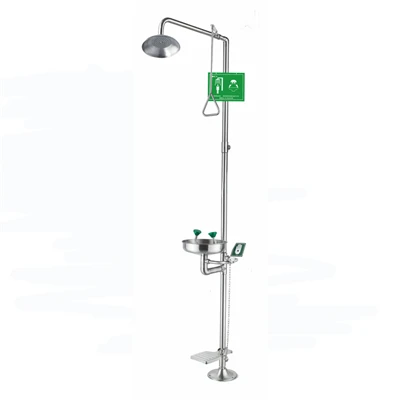


Lab Eye Wash Station
Laboratory eyewash stations provide emergency decontamination for the eyes and face. If a hazardous substance enters or interacts with your eyes, you can use an emergency eyewash station to flush it out immediately.Eyewash stations in laboratories should only be used for emergencies. When conducting experiments, you should first rely on personal protective equipment (PPE), such as goggles or face shields. Other pieces of equipment, like fume hoods, can vent harmful toxins or chemicals out of the lab to prevent contamination in the first place.

Advantages of Lab Eye Wash Station
Immediate Flushing
Chemical splashes or airborne particles can cause severe eye damage if not removed quickly. Eyewash stations provide a readily available water source for flushing the eyes immediately, diluting and washing away contaminants before they cause significant harm.
Reduces Severity of Injury
By enabling quick rinsing, eyewash stations can significantly reduce the severity of eye injuries. The longer a contaminant stays in contact with the eye, the greater the potential for damage. An emergency eye wash station helps minimise this contact time.
Easy to Use in Panic
Made for quick operation, eyewash stations are accessible even during panic. They typically have simple activation mechanisms, allowing immediate flushing without complicated procedures.
Provides Time for Medical Attention
While eyewash stations offer crucial first aid, they are not a substitute for medical care. The 15-minute minimum flush time allows enough time to initiate medical attention while providing initial decontamination.
Accessibility
Strategically placed within laboratories, eyewash equipment must be accessible within 10 seconds of any point where hazardous materials are used. These stations significantly ensure that help is at hand when an emergency occurs.
Types of Lab Eye Wash Station
Deck Mounted Eyewash Stations
Mounted on a countertop; may include small sink or bowl or be installed alongside an existing sink
Stand-alone Eyewash Stations
Mounted to a pedestal that is free-standing on the floor; includes small sink or bowl
Wall Mounted Eyewash Stations
Mounted directly to the wall; may or may not include small sink or bowl
Applications of Lab Eye Wash Station
Chemical Laboratories
In experiments involving volatile or corrosive organic solvents (such as benzene and chloroform), eyewash stations should be located near lab benches and laboratory entrances to prevent reagents from being carried out of the work area and causing secondary injuries.
Biological Laboratories
When handling bacterial or viral samples or using disinfectants (such as chlorine-based disinfectants), eyewash stations can rinse away contaminants from the eyes, reducing the risk of infection.
Pharmaceutical Laboratories
Raw materials and intermediates may be irritating or toxic; eyewash stations provide eye protection for laboratory personnel.
Environmental Science Laboratories
In experiments handling heavy metals, organic pollutants, etc., eyewash stations can address the risk of chemical splashes.
Components of Lab Eye Wash Station
Eyewash Setter
The core component of an eyewash station, typically consisting of eyewash nozzles, valves, and connecting tubing. Eyewash nozzles are usually made of stainless steel or plastic and provide a gentle, even stream of water for rinsing the eyes. Valves control the water flow, offering convenient and quick operation.
Spray System (Some units include)
In addition to eyewash functionality, some eyewash stations are equipped with a spray system for rinsing other parts of the body. Spray heads are usually mounted above the eyewash set, providing a wide-area water flow to effectively remove chemicals from the body.
Base
Used to secure the eyewash set and other components, ensuring the stability of the eyewash station. Bases are generally made of corrosion-resistant materials to withstand harsh laboratory environments.
Laboratory eyewash stations provide a continuous flow of water through two spouts to flush a person’s eyes in an emergency. Distilled, purified, or tap water can be used. No special filters are necessary. The water used in an eyewash station is usually cold or room temperature.
The pressure of the water used in an eyewash station must be high enough for the water to flow up into the eyes. However, there is no standard flow rate required. How the unit is built and installed will determine the water pressure.

Step By Step Guide To Use An Eyewash Station
Step 1. Immediate Action
If the researcher’s eyes are exposed to a hazardous substance, they must immediately proceed to the nearest eyewash station. Every second counts in reducing the severity of potential injury. One should always consider eye wash station maintenance to avoid repercussions.
Step 2. Activate the Station
Activate the eyewash station. This is usually done by pushing a lever or pressing a button. Some stations might require pulling down a handle or stepping on a pedal. One can set settings according to his requirements.
Step 3. Position On The Station
Ensure the water is flowing before the user starts to rinse the eyes. Eyewash stations are designed for hands-free operation once activated. This feature enables the user to concentrate on the flushing process fully.
Step 4. Open The Eyes
The infected scientist must use his fingers to keep his eyes open. One must overcome the instinct to close the eyes so that the flushing fluid can directly contact the eyes. Moreover, keeping the eyes open can make the process much simpler.
Step 5. Rinse Thoroughly
The user must position the eyes in the stream of water or flushing fluid. Ensure that the liquid flows directly onto the surface of each eye. One must move the eyeballs in all directions to facilitate thorough rinsing. This helps flush contaminants from under the eyelids and around the eye.
Step 6. Continue Flushing
One must continue to flush their eyes for at least 15 minutes. Adequate flushing time is crucial for effectively diluting and removing the hazardous substance. However, continuous flushing with tepid water can thoroughly clean the eyes with all hazardous splashes.
Step 7. Seek Medical Attention
After flushing, one must seek medical attention, even if the eyes feel better. Some chemicals can cause delayed reactions or damage that may not be immediately apparent. However, it is better to take professional care to ensure safety and protection.
Installation Requirements
Location Selection
The eyewash station should be installed in an easily accessible and well-lit location within the laboratory, not too far from areas where accidents may occur, such as workbenches and chemical storage areas. A distance of 10-15 meters is generally recommended. The area around the eyewash station should be clear and free of obstructions to avoid affecting its use in emergencies.
Height Requirements
The eyewash nozzles should be at a moderate height, generally 83.8-114.3 cm from the ground, for easy access by laboratory personnel. The height of the shower heads should be adjusted according to the average height of the users to ensure coverage of the upper body.
Water Source and Quality
Fixed eyewash stations should be reliably connected to the laboratory's water supply to ensure a sufficient water supply and stable water pressure. The water quality should meet drinking water standards and should not contain impurities or harmful substances to prevent secondary damage to the eyes and body.
Maintenance and Care
Regular Inspection
The eyewash station should be inspected regularly. This includes checking the eyewash stations and shower system valves for proper function and flexibility, ensuring the nozzles are not clogged, and inspecting connecting pipes for leaks. It is generally recommended to perform a visual inspection weekly and a comprehensive functional check monthly.
Cleaning and Disinfection
Regularly clean and disinfect the eyewash station to remove surface dirt and dust, preventing bacterial growth. Use mild detergents and disinfectants to wipe and rinse, then rinse thoroughly with clean water.
Parts Replacement
If any parts of the eyewash station are found to be damaged or worn, they should be replaced promptly to ensure the proper functioning of the eyewash station. For example, eyewash nozzles and valves may wear out or become clogged after a period of use and need to be replaced.
FAQ
We're well-known as one of the leading eye wash manufacturers and suppliers in China. If you're going to buy customized eye wash, welcome to get quotation from our factory. For price consultation, contact us.
eye wash, Electrical Heat Tracing Shower And Eye Wash, Anti freezing Shower And Eye Wash